



A Gentleman's Guide to Black Tie (Version 2)
Few phrases in the English language carry as much quiet authority as two words on an invitation: Black Tie. It is a dress code that has endured for well over a century, and for good reason. When observed correctly, it lends an occasion a particular sense of formality and elegance.
Black Tie is traditionally worn for evening events, including formal dinners, charity balls, evening weddings, premieres and certain ceremonial occasions. Unlike White Tie, which is reserved for the most formal occasions, Black Tie allows a degree of personal choice while retaining a clear set of conventions.
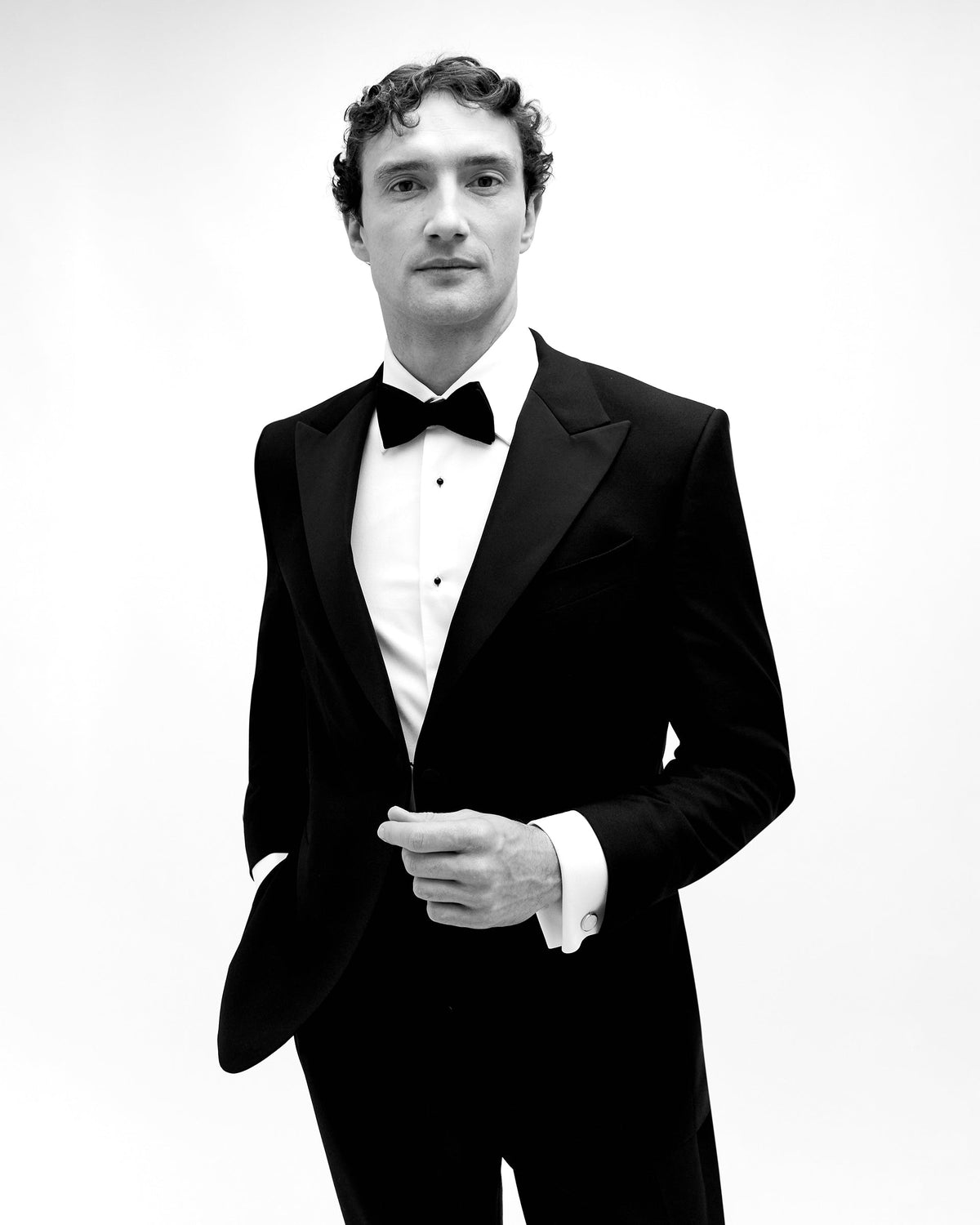
At its foundation is the dinner suit, comprising a black or midnight navy jacket with silk-faced lapels, matching trousers with a single line of braid, a white dress shirt and a black bow tie. The finer details, from the choice of lapel to the style of shirt and footwear, help determine the character of the finished ensemble.
The rules are fewer than many suppose, but they matter. Understanding the distinction between what is traditional and where personal preference is acceptable is central to wearing Black Tie well.

The Gieves House Approach to Black Tie
Traditional Black Tie provides a foundation for individual expression through cloth, pattern and design. While classic black and midnight navy remain enduring choices, more distinctive fabrics and finishes offer the opportunity to introduce a personal touch without losing the elegance of evening dress.
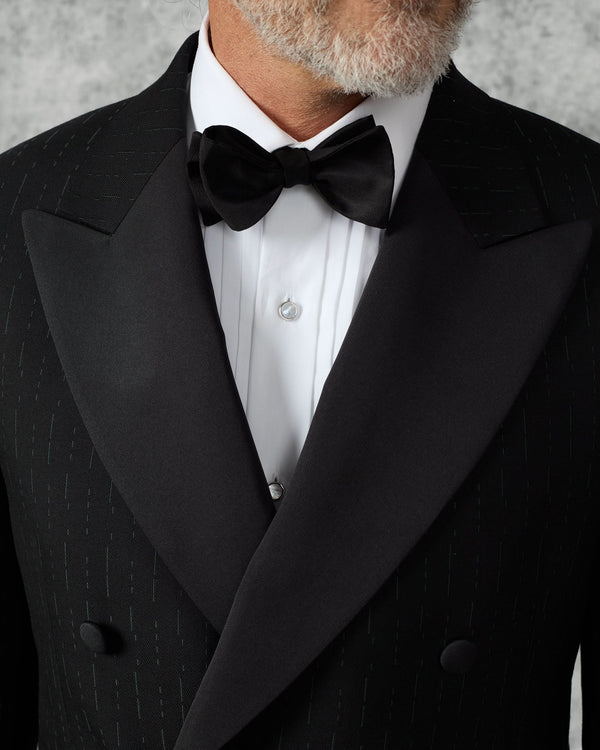
An example is the Bond evening jacket from Gieves House's Echoes of a Landscape collection. Its double-breasted design and gently sweeping shawl lapel preserve the refinement of traditional eveningwear, while the new Gieves House check brings a more individual character. Cut from deeply napped, Italian-milled cotton velvet, the cloth combines rich texture with a subtle, considered pattern.
It is this balance between tradition and individuality that defines the Gieves House approach to Black Tie: respecting the conventions of evening dress while exploring new possibilities in cloth, pattern and design.
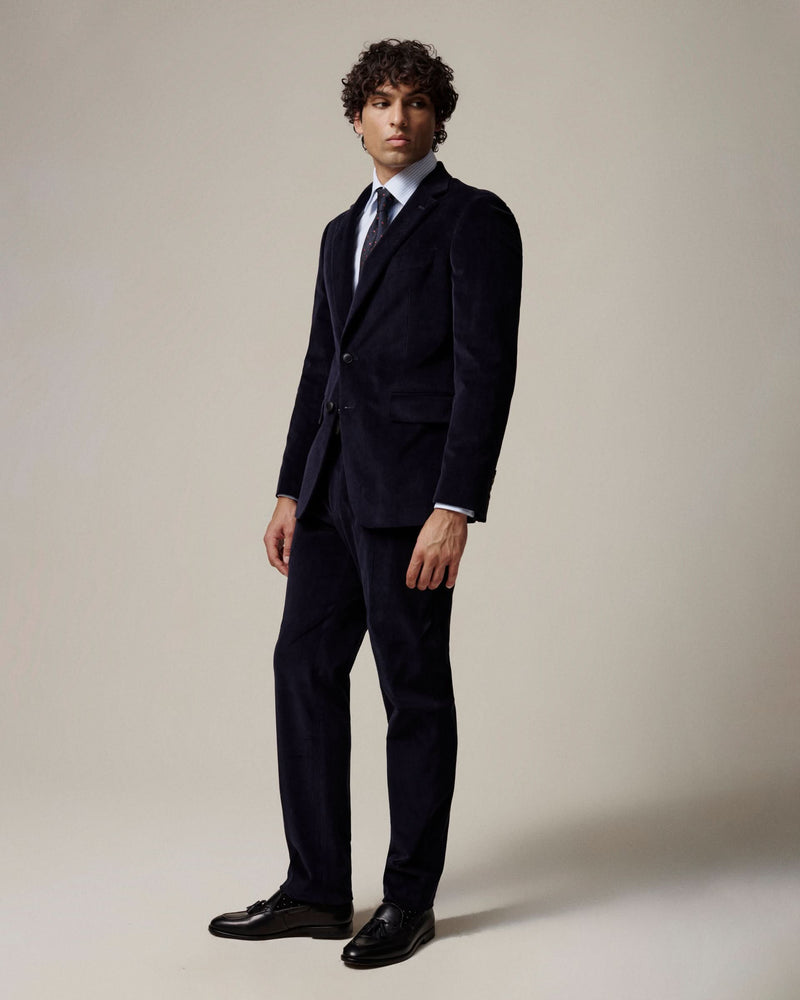
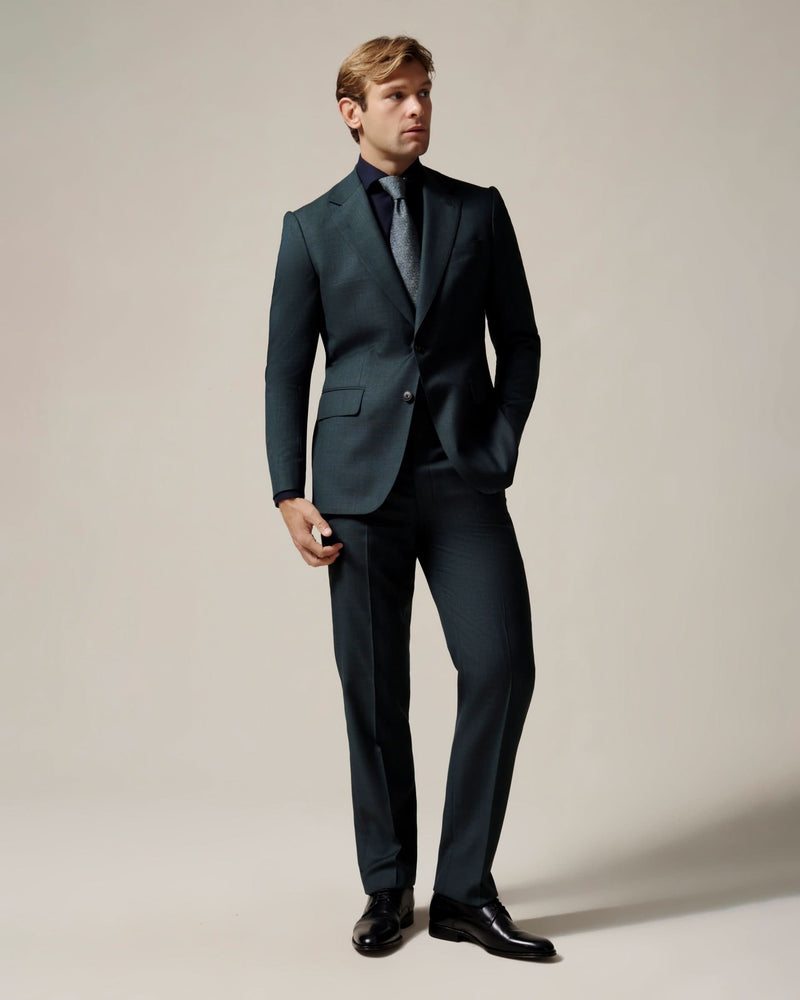
Image 1: A full-length Gieves House dinner suit look, showing the overall silhouette and styling.

Cloth, Lapels and Jacket Design
The dinner jacket provides the opportunity to explore different cloths and design details. Traditional barathea remains a classic choice, while jacquard and textured fabrics introduce pattern and depth. Black and midnight navy offer enduring alternatives, each bringing a different character to evening dress.
The lapels are among the most defining features of the jacket. A peak lapel creates a sharper, more structured appearance, while a shawl collar offers a softer, more fluid line. Both can be finished in satin or grosgrain, with each finish bringing its own character to the cloth.
Other details, including the buttoning, pockets and pattern of the fabric, further distinguish one dinner jacket from another. Together, these choices create a range of styles, from traditional eveningwear to more individual interpretations of Black Tie.

The Shirt, Bow Tie & Accessories
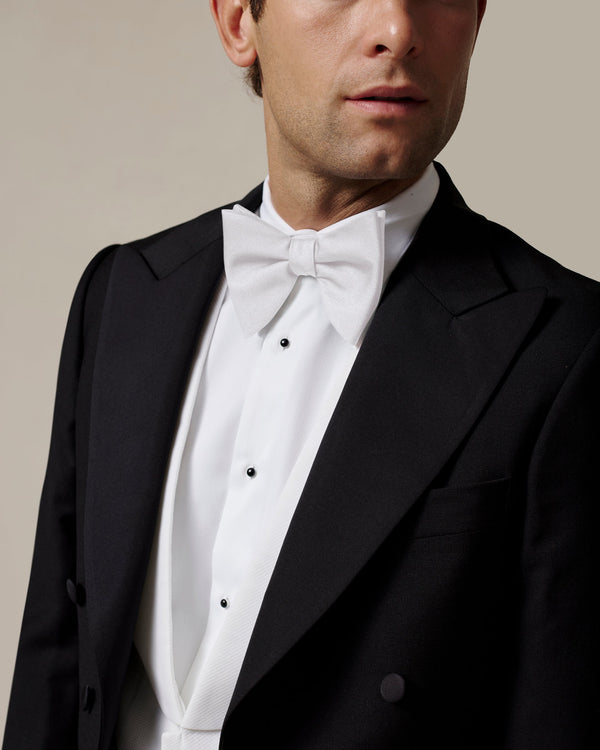
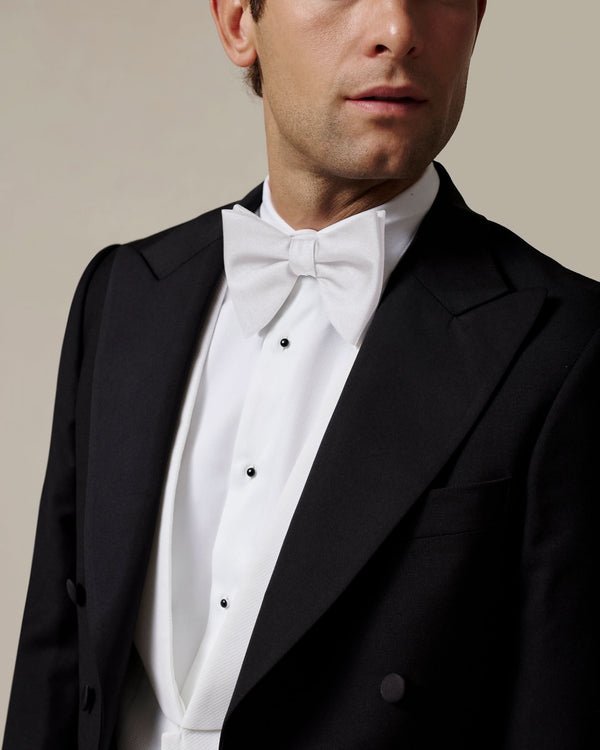
The shirt and accessories play an important part in completing a Black Tie ensemble. Traditionally, a white evening shirt is worn, with a choice of front styles including marcella or pleated detailing. A classic turndown collar offers a versatile choice, while the cuffs are usually designed for cufflinks, often accompanied by shirt studs.
The black bow tie remains central to the look. A self-tied silk bow tie is the traditional choice, adding a certain individuality to the finished ensemble. Satin and grosgrain offer different finishes, allowing the bow tie to complement the facings of the dinner jacket.
Footwear is equally important. Black patent leather Oxfords or evening pumps are traditional choices, while well-polished black calfskin Oxfords are also appropriate. A white linen pocket square and understated accessories provide the finishing touches without distracting from the overall look.
Image 3: A close-up arrangement of an evening shirt, bow tie, cufflinks, studs and other accessories.
The Complete Black Tie Look
A well-considered Black Tie ensemble brings together cloth, design and accessories in a way that feels both appropriate to the occasion and personal to the wearer. While the traditional foundations remain, the choice of jacket, lapel finish, pattern and accompanying details offers considerable scope for individual style.
The most successful looks balance these choices with a sense of restraint. A distinctive dinner jacket can be complemented by a more understated shirt and accessories, while a classic black or midnight navy suit provides the opportunity to introduce character through finer details.
At Gieves House, our Made to Measure [link] and Bespoke [link] services offer the opportunity to explore these choices in greater depth. From selecting the cloth and jacket design to considering the finishing details, each element can be brought together to create an evening suit with a character of its own.